The Migraine Treatment Guide Podcast – A Deep Dive on Dr. Lowenstein’s Approach Featuring the work of: Dr. Adam Lowenstein, MD, FACS, Migraine Surgery Specialty Center
Episode Duration: 21Minutes
Published: July 15, 2026
Category: Headache Surgery | Nerve Decompression | Surgical Recovery | Patient Expectations
Episode Summary
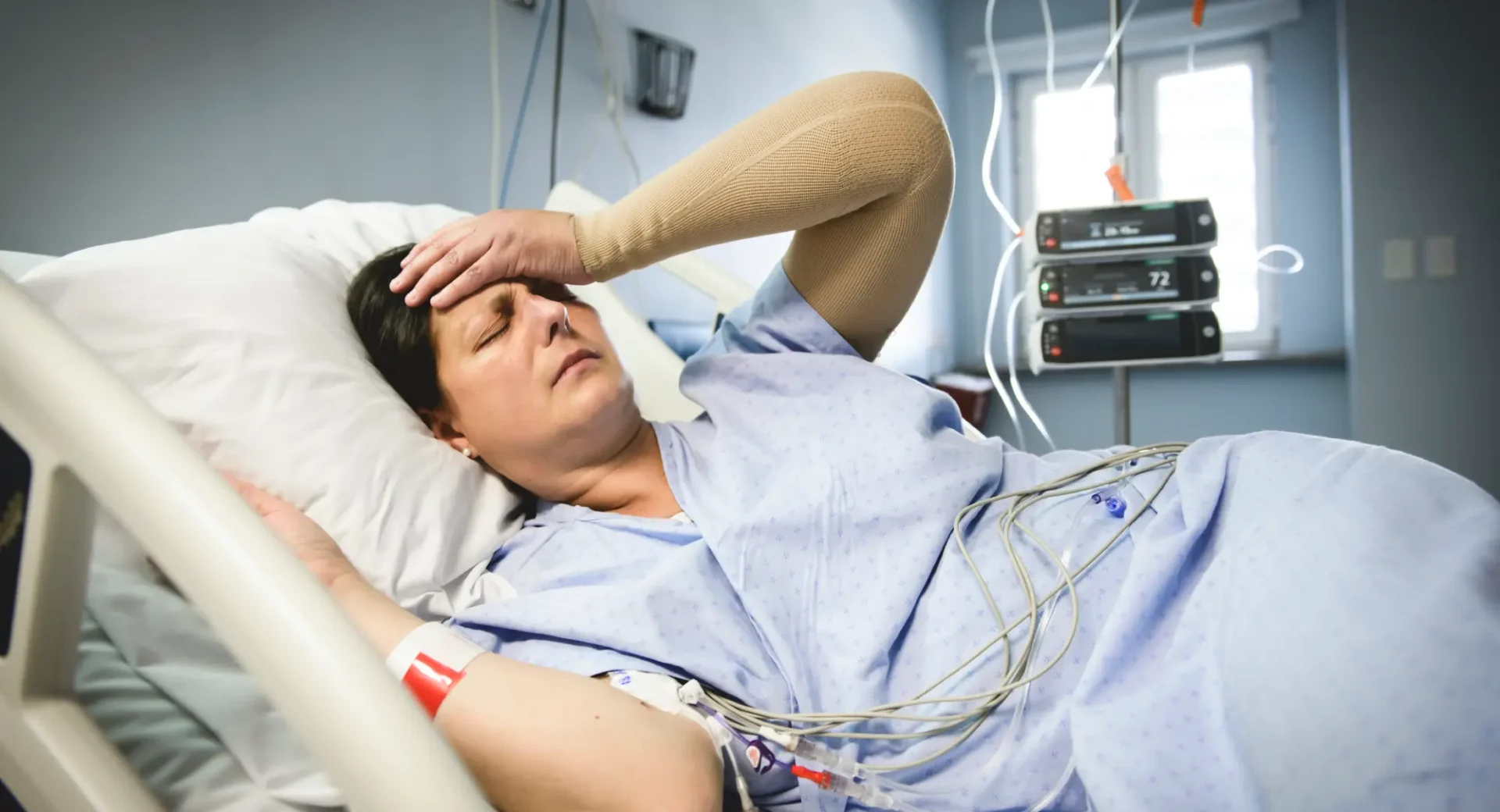
You wake up from nerve decompression surgery and the surgeon tells you it was flawless. Then, three weeks later, a migraine hits so hard you start wondering if you made a terrible mistake. That emotional swing is far more common than most patients realize — and it usually has less to do with failure than with how nerves actually heal. Working from a clinical framework by Dr. Adam Lowenstein, this deep-dive episode explains why releasing a chronically compressed nerve is a months-long biological evolution, not an on-off switch. It maps the four phases of recovery, explains the “hyperexcitable nerve” that makes normal stimuli feel like a blaring car alarm, and reframes the breakthrough headache as a sign of healing rather than failure.
Key Highlights
- Why patients expect a “fixed pipe” but get a months-long biological evolution instead
- The core question: why a technically perfect surgery can take 3–6 months to feel like a success
- The “car parked on a garden hose for five years” analogy — pressure gone, but the hose still dented
- The trigger-site map: greater, lesser, and third occipital nerves; supraorbital and supratrochlear; zygomaticotemporal and auriculotemporal
- The cruel irony — post-surgical inflammation temporarily irritating the very nerve that was just freed
- What’s happening inside the nerve: microvascular remodeling and myelin-sheath repair
- The “frayed electrical wire” — why a damaged myelin sheath makes nerves misfire as pain
- The four phases: acute post-op (days 0–14), early healing (weeks 2–6), nerve remodeling (months 2–4), steady state (months 4–6)
- Why week 6 is the classic panic window — swelling gone, incisions healed, but headaches roaring back
- Hyperexcitability explained as a broken, oversensitive car alarm — a leaf on the windshield sets it off
- Why the appendix comparison fails: an appendix is removed; a decompressed nerve stays in to heal
- Why success isn’t judged until months 4–6 — assessing at week 6 means calling a raw nerve a failure
- The “recovery fingerprint” — why some patients wake up pain-free while others feel every bump
- How compression duration, multi-site surgery, nerve blocks/Botox, individual inflammation, and bruxism shape the timeline
- Peripheral vs. central sensitization — and what a diagnostic block predicts about recovery
- Why the post-op headache is “a different species” from the original migraine — regeneration, not entrapment
- Why progress is measured by an 8–12 week trend line, not any single day
Who Should Listen?
This episode is for:
- Anyone recovering from nerve decompression or headache surgery
- Patients in the difficult weeks 2–6 window wondering if their surgery failed
- People deciding whether to have the procedure and wanting realistic expectations
- Family members supporting someone through a nonlinear recovery
- Patients who had multi-site surgery and a bumpier course
- Anyone who wants to understand what healing actually looks like month by month
Key Topics Covered
|
Topic |
Discussion |
|
Expectation vs. Biology |
Why surgery is an evolution, not an on-off switch |
|
The Immediate Aftermath |
Surgical trauma, inflammation, and a freshly freed nerve |
|
Inside the Nerve |
Microvascular remodeling and myelin-sheath repair |
|
The Four Phases |
Acute post-op, early healing, remodeling, steady state |
|
Hyperexcitability |
The “broken car alarm” and breakthrough headaches |
|
The Recovery Fingerprint |
Why timelines differ; instant vs. gradual relief |
|
Predictive Factors |
Compression duration, multi-site surgery, blocks/Botox, bruxism |
|
Measuring Success |
The 8–12 week trend line, not a single day |
Featured Quote
“The original migraine was a signal of structural entrapment and tissue distress. The post-operative headache is a signal of active cellular regeneration a nerve trying to find a new equilibrium. It feels like the same monster, but biologically it’s a totally different species.”
— The Migraine Treatment Guide Podcast
Transcript
Host 1: Imagine waking up from nerve decompression surgery. The surgeon comes into the recovery room, smiling, and tells you it was a flawless success — the physical compression on the nerve is completely gone.
Host 2: Right. So you go home feeling a huge spark of hope. But then, three weeks later, you’re suddenly hit with the worst migraine of your entire life.
Host 1: Which is terrifying. Your first thought is that the surgery failed. But what if your body is actually doing exactly what it’s supposed to do?
Host 1: Imagine waking up from nerve decompression surgery. The surgeon comes into the recovery room, they’re smiling, and they tell you it was a flawless success.
Host 2: Right. The physical compression on the nerve is just completely gone.
Host 1: Exactly. So, you go home and you’re feeling this huge spark of hope, but then like 3 weeks later, you are suddenly hit with the absolute worst migraine of your entire life.
Host 2: Oh, yeah. Which is terrifying.
Host 1: Truly terrifying. I mean, if you are lying in a dark room holding your head, your first thought is going to be that the surgery just failed. You think my body is broken. But what if your body is actually doing exactly what it’s supposed to do?
Host 2: What’s fascinating here is the massive gap between our cultural expectation of surgery and the actual biological reality of healing.
Host 1: Yeah, we totally think of it as a mechanical fix, don’t we?
Host 2: We do. We expect surgery to be like fixing a broken pipe. The plumber tightens a wrench, the leak stops immediately, and you just never think about it again.
Host 1: Right. You pay the bill and move on.
Host 2: Exactly. But releasing a chronically compressed peripheral nerve is, well, it’s not a mechanical event. The surgical act itself — removing that physical pressure — happens in a matter of hours.
Host 1: But the healing doesn’t.
Host 2: No, not at all. The surrounding tissue, the nerve itself, the whole local ecosystem settling into a new physiological state — that takes months. It’s an evolution, not an on-off switch.
Host 1: And that actually brings us to the main mission of today’s deep dive. Because if you’re out there and you’ve been researching treatments for chronic migraines, you’ve probably come across the success rates of peripheral nerve decompression.
Host 2: Yeah, it’s becoming a heavily discussed option.
Host 1: Right. So, today we are unpacking a really highly detailed clinical document. This comes from Dr. Adam Lowenstein at the Migraine Surgery Specialty Center out in Santa Barbara, California. And we want to understand the hidden mechanisms of recovery here, which are so much more complex than people realize.
Host 2: They really are. The core question we need to obsess over today is this: why does a technically perfect surgery take 3 to 6 months to actually feel like a success to the person who just went under the knife?
Host 1: Well, to answer that, we have to look at the immediate post-operative environment. The surgeon’s goal is obviously to relieve mechanical pressure, right? But to do that, they have to navigate through layers of tissue, make incisions, and physically release these tight fibrous bands or muscular structures that are literally choking the nerves.
Host 2: So, they’re actively cutting away the compression.
Host 1: Yes. But creating that surgical pathway inherently causes local tissue trauma.
Host 2: Okay, let’s unpack this because the physical mechanics are just wild to think about. Imagine you have a rubber garden hose. It’s sitting on your driveway and you park your car’s tire right on top of it.
Host 1: Ouch. Yeah, great visual.
Host 2: And you leave the car parked there for like 5 years. If you finally back the car off that hose, you successfully decompressed it. The heavy crushing pressure is gone.
Host 1: Right. The tire is off.
Host 2: But that doesn’t mean the hose is magically fixed. The rubber is deeply dented. The internal structure is totally restricted and damaged. Water isn’t going to just start flowing perfectly the exact second the tire moves. That structural damage is exactly what we see in the human anatomy — and the hoses we are talking about here are incredibly complex.
Host 1: Yeah. Let’s talk about the specific nerves Dr. Lowenstein’s document details, just to give everyone a real sense of the anatomical scale here.
Host 2: Yeah. So we are dealing with the greater, lesser, and third occipital nerves at the back of the head.
Host 1: Right. Those are the big ones back there.
Host 2: Exactly. And then we’re also looking at the supraorbital and supratrochlear nerves. Those are situated right above the eyes.
Host 1: Uh-huh. And then on the sides of the head?
Host 2: On the sides you have the zygomaticotemporal and the auriculotemporal nerves.
Host 1: Wow. Hearing that list, it is basically a topographic map of everywhere a severe migraine can live.
Host 2: It really covers all the major trigger sites. And when the surgeon frees these nerves, the body immediately mounts an inflammatory response to those surgical incisions.
Host 1: Because it’s just standard wound healing. Right?
Host 2: Exactly. White blood cells rush to the area, fluid accumulates, and you get swelling. So, the cruel irony for the patient is that this brand new post-surgical inflammation can actually press on and chemically irritate the exact same nerve that was just freed.
Host 1: Man. So, you literally trade a permanent physical clamp for a temporary inflammatory squeeze.
Host 2: That’s a perfect way to put it.
Host 1: That completely explains why the pain doesn’t just vanish on day one. But going back to that garden hose analogy for a second — the nerve itself still has to recover from years of being crushed. How does a nerve physically rebuild its dented rubber, so to speak?
Host 2: Well, a chronically compressed nerve suffers from altered blood flow, which leads to it being mechanically and chemically sensitized.
Host 1: So, it’s basically on high alert.
Host 2: Highly sensitized, yes. And in long-standing cases, the nerve actually sustains small fiber injury. The physical architecture of the nerve is degraded. To fix this, the body initiates microvascular remodeling.
Host 1: Okay, let’s break that terminology down. What is actually happening at a cellular level during this remodeling?
Host 2: So the microvasculature — those are the tiny microscopic blood vessels that feed the nerve tissue. They have to physically rebuild themselves to restore proper oxygen and nutrient flow.
Host 1: Because without that blood supply, the nerve just cannot function.
Host 2: Exactly. And at the exact same time, the nerve has this protective insulation called the myelin sheath. Years of compression basically wear that insulation down.
Host 1: Like a frayed electrical wire.
Host 2: Yes. Think of it exactly like a frayed electrical wire. When the insulation is frayed, the electrical signals misfire and they create sparks.
Host 1: And in a human nerve, those misfiring sparks translate to pain.
Host 2: Intense burning pain. So repairing that myelin sheath and allowing those tiny nerve fibers to actually regenerate — it requires a cellular rebuilding process that is strictly dictated by biology. It is measured in months, not days.
Host 1: Wow. So because the post-op inflammation and this microscopic rebuilding process are happening at the exact same time, the patient’s head is essentially just a massive biological construction zone.
Host 2: That is exactly what it is.
Host 1: Which brings us to the actual timeline. If you are the listener dealing with this, you don’t just want the cellular biology. You want to know what this actually looks like on a calendar.
Host 2: Absolutely. The timeline is crucial.
Host 1: But I have to stop and admit some confusion here. Just playing devil’s advocate for a second.
Host 2: Go for it.
Host 1: If my appendix is about to burst, a surgeon removes it and 3 weeks later I do not have appendicitis symptoms. The problem was removed.
Host 2: Right. It’s gone.
Host 1: So, if a surgeon perfectly removed the compression on my occipital nerve, why would I still be having breakthrough migraines 3 weeks later? Doesn’t that just fundamentally point to the surgery failing?
Host 2: It feels like a failure to a patient who hasn’t been warned about how hyperexcitability works. An appendix is an organ that gets removed entirely. A decompressed nerve is left inside the body to heal.
Host 1: Oh, that is such a key difference.
Host 2: It really is. Understanding the four phases of this biological timeline is the only way to reframe a breakthrough headache. Instead of viewing it as a red alert that the surgery failed, you start to view it as a normal, expected data point in a healing trajectory.
Host 1: Okay, let’s map out these four phases so we know exactly what is happening beneath the surface. Phase one is the acute post-op phase, covering days 0 to 14.
Host 2: Yeah. And this window is entirely dominated by the trauma of the operation itself. Surgical inflammation is at its absolute peak here.
Host 1: So, we’re talking about the swelling, the bruising.
Host 2: Swollen, bruised, and highly reactive local tissue. The fluid accumulating around that freshly released nerve causes significant mechanical irritation.
Host 1: So, you might feel worse before you feel better.
Host 2: Some patients might even notice their traditional migraine pattern shifting. But the key takeaway is that how you feel on day seven is completely separate from your underlying chronic headache disorder.
Host 1: Because your head just went through a controlled trauma. So the pain in phase one isn’t a migraine. It’s literally just surgical recovery.
Host 2: Precisely. It is not predictive of your final outcome. And then we move into phase two, which is early healing. This covers roughly weeks 2 through 6.
Host 1: Okay. What happens in weeks 2 through 6?
Host 2: The visible edema — the physical fluid and swelling — begins to drain away. The nerve is no longer being squished by the surgeon’s incisions.
Host 1: But this is usually the exact window where a patient panics, right? Because the swelling is gone, the incisions look completely healed on the outside, but the headaches can suddenly come roaring back.
Host 2: Exactly. The physical swelling is gone, but the nerve is now raw and exposed. It is entering a highly irritated, hyperexcitable state.
Host 1: Hyperexcitable. What does that feel like?
Host 2: Well, to understand hyperexcitability, imagine a highly calibrated car alarm. Before the surgery, the nerve was muffled and crushed. Now that it is free, the alarm system is broken and overly sensitive.
Host 1: Okay, I’m tracking.
Host 2: So, a normal, non-painful stimulus — like turning your neck, a change in barometric pressure, or even just your own pulse — can trigger the alarm. A leaf falls on the windshield and the car just starts blaring.
Host 1: Oh, wow. That makes total sense of the clinical symptoms. You might have three amazing, completely pain-free days where you think you are cured, and then one tiny trigger sets off that car alarm, resulting in a severe breakthrough headache.
Host 2: Yeah, the fluctuation in this window is the absolute hallmark of a nerve waking up. It is throwing a biological tantrum as it tries to recalibrate to normal sensory input.
Host 1: A biological tantrum. I like that.
Host 2: And that turbulent up-and-down pattern leads us straight into phase three, nerve remodeling. We are now looking at months 2 through 4.
Host 1: Ah, this is where that frayed electrical wire finally gets its new insulation.
Host 2: You got it. The core regenerative work happens here. The Schwann cells, which are the cells that maintain the myelin sheath, they’re actively repairing the nerve’s insulation.
Host 1: And what about the blood flow?
Host 2: The microvascular blood supply is stabilizing, too. As that structural integrity improves, the car alarm becomes less sensitive. The nerve stops misfiring at every little stimulus.
Host 1: So for the patient, this translates to a gradual reduction in both the frequency and the intensity of the pain.
Host 2: Yeah. But the text puts a massive underline on the word gradual. The improvement here is slow and totally nonlinear. You might string together two great weeks followed by three bad days. It is not a straight line down to zero pain.
Host 1: Which is exactly why the final assessment of the surgery is delayed until phase 4, the steady state, which covers months four through six.
Host 2: Months four through six. So by the half-year mark —
Host 1: By the half-year mark, the nerve function and the local tissue architecture have finally approached a new stable physiologic baseline. The remodeling is largely complete.
Host 2: Half a year is a staggering amount of time to wait for a definitive answer on whether a surgery worked.
Host 1: It is a long time. But Dr. Lowenstein’s text points out that the published literature, including the foundational Guyuron outcomes studies, do not even attempt to judge the success of the procedure until this 4 to 6 month mark.
Host 2: Because if you try to assess the outcome at week six, you are literally looking at a raw, hyperexcitable nerve and calling it a failure.
Host 1: If we connect this to the bigger picture, allowing the full 6 months for the steady state to arrive is really the only scientifically valid way to interpret this surgical benefit.
Host 2: Okay. But looking at this rigid 6-month biological timeline reveals a pretty massive contradiction in the source text.
Host 1: Oh, about the instant recoveries.
Host 2: Yes. We just established that rebuilding myelin and blood vessels takes half a year. Yet the text clearly acknowledges that some patients wake up from anesthesia on day one and are miraculously, instantly pain-free forever.
Host 1: Yeah, sounds like magic, right? If biology takes 6 months, how are these people skipping the line?
Host 2: The truth is they aren’t skipping the biology. Their nerves still require the exact same axonal remodeling, and their bodies still produce the exact same surgical inflammation.
Host 1: Wait, really? So why don’t they feel it?
Host 2: The difference lies in what we can call the patient’s individual recovery fingerprint. Every surgery is anatomically similar, but the physiological variables dictating symptom manifestation are incredibly distinct.
Host 1: Here’s where it gets really interesting. Let’s connect those variables. Starting with the sheer element of time — the duration and severity of the pre-surgical compression has to play a massive role, right?
Host 2: Huge role. A nerve that has been crushed for 10 or 15 years has severe structural degradation. The myelin is heavily damaged. The sensitization is deeply entrenched.
Host 1: So remodeling that specific nerve will take the full 6 months.
Host 2: And the patient will likely feel every bump along the way. Now contrast that with a patient who has only been dealing with compression for, say, 18 months. Their nerve hasn’t been damaged nearly as badly.
Host 1: Right. The nerve is irritated, but structurally it is in much better shape. It calibrates faster.
Host 2: And the physical location of the trauma compounds that timeline too. If a surgeon only treats one isolated trigger site, say just the occipital nerve at the back of the head, the body only has to manage one localized inflammatory response.
Host 1: Exactly. But many severe chronic migraine patients require decompression at multiple sites simultaneously. So they might get the occipital nerves plus the ones above the eyes plus the ones on the sides.
Host 2: Right. And the body is now trying to manage overlapping inflammatory responses and multiple nerves waking up and throwing tantrums on slightly different schedules.
Host 1: Wow. So a multi-site surgery just naturally dictates a more volatile, protracted recovery phase.
Host 2: It has to, just biologically speaking. Which makes me wonder how a surgeon actually predicts this volatility before even making an incision.
Host 1: Yeah, the text mentions diagnostic nerve blocks and Botox. Why does a temporary numbing shot predict a six-month surgical outcome?
Host 2: It all comes down to isolating the mechanism of the pain. Migraines can be driven by peripheral sensitization, meaning the issue is out in the nerves of the head and neck, which surgery can fix.
Host 1: Okay.
Host 2: Or they can be driven by central sensitization, meaning the central nervous system — like the brain and spinal cord — is misinterpreting signals. And surgery can’t fix a central nervous system issue.
Host 1: Exactly. So when a doctor injects a local anesthetic or Botox into a specific peripheral trigger site, they’re temporarily turning off that specific nerve. If the patient has a perfectly clean, positive response — meaning their migraine completely vanishes — it proves the pain is heavily peripheral. That patient is highly likely to have a very clear, distinct surgical recovery.
Host 2: But what if the block only provides, like, partial relief?
Host 1: If it’s partial, it suggests a mix of peripheral and central factors. The surgery will still alleviate the peripheral burden, but the underlying central sensitivity will make the post-operative recovery much bumpier.
Host 2: Add basic human inflammation to that mix and the timeline shifts again. We all know someone who gets a paper cut and their finger swells up like a balloon, while someone else can break a bone and barely show any bruising.
Host 1: Right. We all heal at different speeds.
Host 2: So, how fast your specific immune system clears out post-operative swelling dictates how long that surgical fluid literally just sits there irritating your decompressed nerve.
Host 1: And we also have to look beyond the nerve itself to coexisting muscular or myofascial contributions. This is a really crucial variable.
Host 2: I got it. Well, a patient might have severe bruxism, which is chronic teeth grinding. That grinding exerts massive mechanical force on the temporalis muscle, which clamps down on the temporal and zygomaticotemporal nerves.
Host 1: Okay. So the surgeon can perfectly decompress the nerve, freeing it from the surrounding tissue.
Host 2: But if the patient goes home and continues grinding their teeth every single night, they are physically battering the surgical site.
Host 1: Oh man. So the nerve is trying to heal while the muscle right around it is constantly spasming.
Host 2: Exactly. That residual muscular tension causes a secondary type of headache that resolves on a much slower timeline, totally independent of the nerve’s internal remodeling process.
Host 1: Tying all of these variables together actually perfectly explains the anomaly of the instant pain-free patient. Their biology isn’t magical at all.
Host 2: No, not magical. For those specific individuals, the mechanical compression was the solitary driver of their pain.
Host 1: Right. They didn’t have severe central sensitization. They didn’t have overlapping muscular issues like bruxism. Once the physical clamp was removed, the new surgical swelling simply didn’t happen to trigger their specific individualized pain pathway.
Host 2: So, they are still going through six months of cellular remodeling. They just happen to be experiencing that hidden biological process without the car alarm going off.
Host 1: It is entirely about how symptoms manifest, not a bypass of the healing timeline. For the vast majority of patients who do experience breakthrough headaches, they are simply feeling the inflammation, the nerve desensitizing, or that secondary muscle tension.
Host 2: Knowing the mechanics behind those breakthrough headaches brings us to what has to be the most difficult part of this entire process. Living through month three, waking up with a severe headache and trying to convince yourself that the surgery didn’t fail, takes an immense psychological toll.
Host 1: It is so incredibly draining for patients. If your brain immediately goes to “I just went through surgery for absolutely nothing,” the despair has to be overwhelming.
Host 2: The clinical document makes a vital distinction specifically to help patients navigate that moment of panic. A post-surgical headache during the recovery window is fundamentally different from the patient’s original chronic migraine.
Host 1: It feels like the same monster, but biologically it’s a totally different species.
Host 2: Beautifully said. The original migraine was a signal of structural entrapment and tissue distress. The post-operative headache is a signal of active cellular regeneration and a nerve trying to find a new equilibrium.
Host 1: It reflects a surgical site that is actively engaged in healing.
Host 2: Yes. And even in the midst of that turbulent healing, there is a measurable shift in the baseline.
Host 1: Yeah. The text notes that during the absolute worst stretches of recovery, patients consistently report that their day-to-day pain is meaningfully less severe than before they went under the knife.
Host 2: A patient who spent years experiencing daily, completely disabling migraines that forced them into a dark room might now experience shorter, milder headaches.
Host 1: They are still painful, obviously, and they are still frustrating.
Host 2: But they are no longer completely incapacitating. When you are exhausted and just want the pain to stop forever, it is incredibly easy to lose sight of that incremental progress. You want the miracle cure, not a slight reduction in severity.
Host 1: This raises an important question about how we define “getting better” in a medical context. We are conditioned by modern medicine to expect immediate eradication of a symptom.
Host 2: Take a pill, the headache goes away.
Host 1: Exactly. But with complex neurobiology, defining success requires a wider lens. Setting these highly specific, biologically grounded expectations before the patient is ever put under anesthesia is the ultimate shield against unnecessary alarm.
Host 2: Because if a patient fully understands that month three is going to involve wild fluctuations and misfiring nerves, they don’t spiral into despair when a headache hits.
Host 1: They recognize the car alarm and they stay the course.
Host 2: So what does this all mean for someone navigating this landscape? It means that true surgical outcomes cannot be judged by how you feel on a random Tuesday in week six.
Host 1: No, they are revealed through steady patient observation over a period of many months. Healing is a long-term trend line, not a single data point.
Host 2: And the relevant clinical question during recovery is never whether today was completely headache-free.
Host 1: The relevant question is whether the overall trajectory over the last 8 to 12 weeks is pointing toward a new, lower baseline of pain.
Related Episodes & Reading



About the Physician
 About Dr. Adam Lowenstein
Dr. Adam Lowenstein, MD, FACS, is a board-certified plastic surgeon and the founder of the Migraine Surgery Specialty Center, with locations in Santa Barbara, Los Angeles, and Denver. He specializes in peripheral nerve decompression for chronic headache and migraine pain and is the author of Headache Surgery: Understanding a Path Forward. His work — including the clinical framework this episode is built around — reframes headache care from the physiology of pain toward the anatomy behind it.
FAQ Section
Why do I still have headaches weeks after a successful nerve decompression?
Because releasing the nerve is not an on-off switch. The surgery itself creates local tissue trauma and inflammation that can temporarily irritate the very nerve that was freed, and the nerve needs months to rebuild its blood supply and myelin insulation. A breakthrough headache in the early weeks is usually a sign of healing, not failure.
What are the phases of recovery?
Four phases: acute post-op (days 0–14), dominated by surgical inflammation; early healing (weeks 2–6), when swelling drains but the nerve becomes raw and hyperexcitable; nerve remodeling (months 2–4), when the myelin sheath and blood supply rebuild; and steady state (months 4–6), when the nerve reaches a new stable baseline.
What is nerve “hyperexcitability”?
Once freed, a nerve that was muffled by compression can become oversensitive — like a broken car alarm that goes off at the slightest stimulus. Turning your neck, a change in barometric pressure, or even your own pulse can trigger a breakthrough headache. It’s the hallmark of a nerve waking up and recalibrating.
Why do some patients feel pain-free immediately while others take months?
Everyone follows the same underlying biology, but symptoms manifest differently — a “recovery fingerprint.” Patients whose pain was purely from mechanical compression, without central sensitization or muscular contributors, may not feel the healing process. Those with long-standing compression, multi-site surgery, or coexisting factors tend to feel every bump.
How long before I know if the surgery worked?
Generally 4 to 6 months. Published outcome studies don’t assess success before that window, because judging the result at week 6 means evaluating a raw, hyperexcitable nerve mid-healing. Success is measured by the trend over the last 8 to 12 weeks, not by any single day.
Can teeth grinding affect my recovery?
Yes. Bruxism (chronic teeth grinding) puts force on the temporalis muscle, which can clamp down on nearby nerves and batter the surgical site. Even after a perfect decompression, ongoing grinding can cause a secondary muscular headache that resolves on its own, slower timeline.
Medical Disclaimer
This podcast is provided for general educational purposes and is not medical advice. Individual candidacy and surgical outcomes vary. Anyone dealing with chronic pain should consult a qualified physician or surgeon for a formal evaluation appropriate to their specific anatomy and condition. To learn more or schedule a consultation, call the Migraine Surgery Specialty Center at 805-969-9004 or visit headachesurgery.com .